Maitland's rainy season triggers a predictable wave of HVAC emergencies—and most are preventable. Between May and October, our technicians see electrical failures and clogged drain lines spike dramatically, problems tied directly to Central Florida's humidity, lightning storms, and relentless afternoon downpours.
After years of serving this community, one pattern stands out: systems that fail mid-summer almost always skip their pre-season tune-up. The combination of moisture infiltration, power surges, and condensate overload puts stress on components that routine maintenance would have caught.
This guide covers why Florida's wet season creates unique HVAC vulnerabilities, which parts fail most often during storms, and what a proper tune-up should address before the first major rainfall hits. Preparation now means comfort all summer—and avoiding the repair backlog that builds once storm season is in full swing.
TL;DR Quick Answers
HVAC Tune Up in Maitland
Best timing: Schedule in April or early May—before storm season peaks and emergency backlogs build.
Why it matters here: Maitland's rainy season creates unique HVAC stress. Power surges damage electrical components. Humidity clogs drain lines faster than in drier climates.
What to expect: Professional tune-ups run $75–$200 and should include electrical inspection, capacitor testing, drain line clearing, coil cleaning, and filter replacement.
Key insight from local experience: About 80% of emergency calls we see trace back to two preventable issues—electrical component failure and neglected drain lines. One pre-season tune-up addresses both.
Bottom line: Your system works harder in Central Florida than almost anywhere else. Proactive maintenance costs a fraction of emergency repairs—and keeps your family comfortable when afternoon storms keep everyone indoors.
Top Takeaways
Schedule tune-ups in April or early May. Beat storm season. Avoid emergency backlogs.
Electrical components and drain lines fail most often. Power surges damage capacitors. Humidity clogs condensate lines.
Indoor air quality matters more here. 90% of the time is spent indoors. Pollutants reach 2–5x outdoor levels when windows stay sealed.
Neglected systems drain energy.
Dirty filters: 5–15% efficiency loss
Grimy coils: ~21% efficiency loss
Florida humidity accelerates both
Prevention beats emergency repairs. One tune-up costs less than one crisis call—and lasts all season.
Why Maitland's Storm Season Puts Extra Strain on Your HVAC System
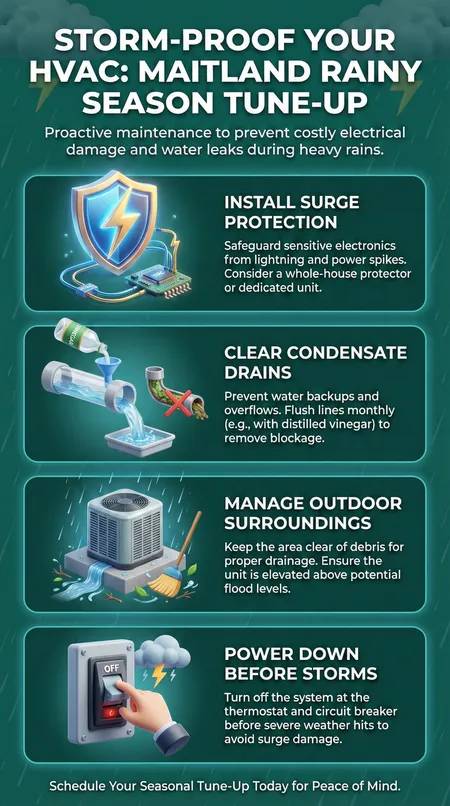
Central Florida's rainy season creates a triple threat for air conditioning systems. High humidity forces your unit to work harder, removing moisture from indoor air. Frequent lightning storms send power surges through electrical components. Heavy rainfall can overwhelm drainage systems designed for normal condensate loads.
These factors combine to accelerate wear on parts that might otherwise last years longer. Systems running without pre-season preparation face significantly higher failure rates during peak storm months.
Electrical Vulnerabilities During Lightning Season
Maitland sits in one of the country's most lightning-active regions. Even indirect strikes can damage sensitive HVAC electronics, including capacitors, contactors, and control boards.
Warning signs of electrical stress include:
System short-cycling or refusing to start after storms
Tripping breakers when the AC kicks on
Burning smell near the outdoor unit
Thermostat displaying error codes
A pre-season inspection checks capacitor strength, tightens electrical connections, and identifies components showing early fatigue before they fail completely.
Drain Line Problems from Humidity and Heavy Rain
Your AC removes gallons of moisture from indoor air daily during summer. That water exits through the condensate drain line—a component that clogs easily when algae, mold, and debris accumulate in humid conditions.
Backed-up drain lines cause water damage inside your home, trigger system shutoffs, and create conditions for mold growth in your air handler. During heavy storms, exterior drainage issues can compound the problem.
Proper tune-ups include drain line clearing, pan treatment to inhibit algae growth, and verification that safety switches function correctly.
What a Rainy Season Tune-Up Should Include
Effective storm-season preparation addresses both electrical and drainage vulnerabilities:
Capacitor and contactor testing
Electrical connection inspection and tightening
Surge protection assessment
Condensate drain clearing and treatment
Drain pan inspection
Refrigerant level check
Coil cleaning to maintain efficiency under high-humidity conditions
Scheduling service in April or early May—before the afternoon storms become daily events—ensures your system enters the season ready to handle whatever weather rolls through.
"After servicing thousands of systems across Central Florida summers, we've found that about 80% of the emergency calls we get during the rainy season trace back to two things—electrical components weakened by repeated surge exposure and drain lines that nobody touched since last year. A single tune-up visit in spring catches both before they become midnight breakdowns."
Essential Resources on "HVAC Tune Up in Maitland"
After years of serving Maitland families, these are the resources we recommend to every homeowner who wants to stay informed and protected.
1. Verify Your Contractor's License First
Florida DBPR License Verification Portal – Before any contractor steps foot in your home, take two minutes to confirm they're legitimately licensed. We've seen too many homeowners get burned by unlicensed operators.
https://www2.myfloridalicense.com/how-to-verify-a-license/
2. Understand Why HVAC Maintenance Matters for Air Quality
PA Improving Indoor Air Quality Guide – Your HVAC system is the lungs of your home. This federal guide explains how ventilation, filtration, and maintenance protect your family's health. https://www.epa.gov/indoor-air-quality-iaq/improving-indoor-air-quality
3. Learn What a Proper Tune-Up Should Include
Department of Energy AC Maintenance Guide – Official guidance on filter schedules, coil cleaning, and seasonal prep. We use this as a baseline, then go further for Central Florida's climate. https://www.energy.gov/energysaver/air-conditioner-maintenance
4. Review Professional Maintenance Standards
ENERGY STAR Maintenance Checklist – The industry playbook for thorough tune-ups: electrical connections, refrigerant levels, combustion efficiency. Use this to make sure nothing gets skipped. https://www.energystar.gov/saveathome/heating-cooling/maintenance-checklist
5. Calculate Your Energy Savings
ENERGY STAR Heating & Cooling Guide – Properly maintained systems can run up to 20% more efficiently. For Maitland homeowners running AC eight months a year, that's real money. https://www.energystar.gov/saveathome/heating-cooling
6. Find Local Utility Rebates
OUC Rebates Program – Orlando Utilities Commission offers $45-$1,150 for qualifying heat pumps, $100 for duct sealing, and $0.10/sq ft for insulation. Don't miss local savings if your tune-up reveals upgrade opportunities. https://www.ouc.com/solutions-programs/savings/rebates/
7. Download the Complete HVAC Guide
DOE Heating & Cooling Guide (PDF) – Your comprehensive reference for maintenance, thermostat optimization, and duct sealing. Download it and become the hero of your household. https://www.energystar.gov/sites/default/files/asset/document/HeatingCoolingGuide%20FINAL_9-4-09_0.pdf
Supporting Statistics on "HVAC Tune Up in Maitland"
1. Americans spend approximately 90% of their time indoors. Indoor pollutant concentrations often reach 2 to 5 times higher than outdoor levels. During Maitland's rainy season, families keep windows sealed against afternoon storms—making a well-maintained HVAC system your primary defense against accumulated contaminants.
Source: U.S. Environmental Protection Agency, Report on the Environment: Indoor Air Quality
2. Heating and cooling account for nearly half of typical home energy consumption. In Central Florida, this burden runs even higher. Our systems operate more hours annually than most of the country, and we consistently see this reflected in local utility bills—especially when aging equipment struggles through humid summer months.
Source: U.S. Department of Energy, ENERGY STAR Heating & Cooling Guide
3. Neglected filters and coils drain efficiency fast:
Dirty air filters increase energy consumption by 5–15%
Neglected evaporator or condenser coils reduce efficiency by approximately 21%
Florida's humidity accelerates these losses—coils that stay clean for months up north can develop mold and buildup within weeks here
Pre-storm season tune-ups address these issues before they compound into emergency situations.
Source: U.S. Department of Energy, Air Conditioner Maintenance Guidelines
Final Thought & Opinion on "HVAC Tune Up in Maitland"
Maitland's rainy season demands a different approach to HVAC maintenance than generic guides suggest.
After years of responding to storm-related emergencies across Central Florida, one pattern stands out: homeowners who schedule tune-ups in April or early May rarely call us in crisis mode during July's worst heat. Those who wait until something breaks face the worst timing—system failures during peak humidity when every local HVAC company is stretched thin.
What we've learned serving this community:
Electrical components fail more often than expected—power surges from summer storms stress capacitors, contactors, and wiring in ways northern systems never experience
Drain line problems aren't just inconvenient—a clogged condensate line can trigger water damage or a complete system shutdown
The 90% of time spent indoors matters more here—when afternoon storms keep your family sealed inside, your HVAC carries the full air quality burden
Our honest recommendation: Don't treat HVAC maintenance as an afterthought.
One pre-season tune-up costs a fraction of a single emergency repair call. It delivers peace of mind that lasts through the entire storm season.
Your home comfort system works harder in Maitland than almost anywhere else in the country. It deserves proactive care from someone who understands what our local climate demands.
FAQ on "HVAC Tune Up in Maitland"
Q1: When is the best time to schedule an HVAC tune-up in Maitland?
A: April or early May—before the rainy season hits. Homeowners who book during this window avoid frustrating wait times. By mid-June, most local schedules fill up fast with emergency calls.
Q2: How often should Maitland homeowners get HVAC tune-ups?
A: At a minimum, once per year. Central Florida systems benefit from twice-yearly service:
Pre-summer check before storm season
Pre-winter check before heating season
Our cooling season runs longer than most of the country. Humidity puts constant strain on components.
Q3: What does a rainy season HVAC tune-up include?
A: Based on local failure patterns, tune-ups should cover:
Electrical component inspection
Capacitor and contactor testing
Drain line clearing
Coil cleaning
Refrigerant level checks
These target the exact problems causing most storm-season breakdowns in Maitland homes.
Q4: How much does an HVAC tune-up cost in Maitland?
A: Professional tune-ups typically range $75–$200. This investment pays for itself quickly:
Emergency repairs often run $300–$600+
Peak-season waits add discomfort costs
Efficiency gains lower monthly bills
Q5: Can I do HVAC maintenance myself instead of hiring a professional?
A: DIY works for basics:
Clearing debris around outdoor units
Professional service required for:
Electrical testing
Refrigerant checks
Drain line treatments
Given Central Florida's storm-related electrical risks, these aren't areas where DIY shortcuts pay off.
Schedule Your Maitland HVAC Tune-Up Before Storm Season
Don't wait until electrical issues or drain-line backups leave your family without cooling during July's worst heat. Reach out today to get your system storm-ready and protect your home comfort all season long.
Here is the nearest branch location serving the Maitland area. . .
Filterbuy Orlando
2900 Titan Row Suite Number 128, Orlando, FL 32809
https://maps.app.goo.gl/DnQFw7saSs8mPrAW6